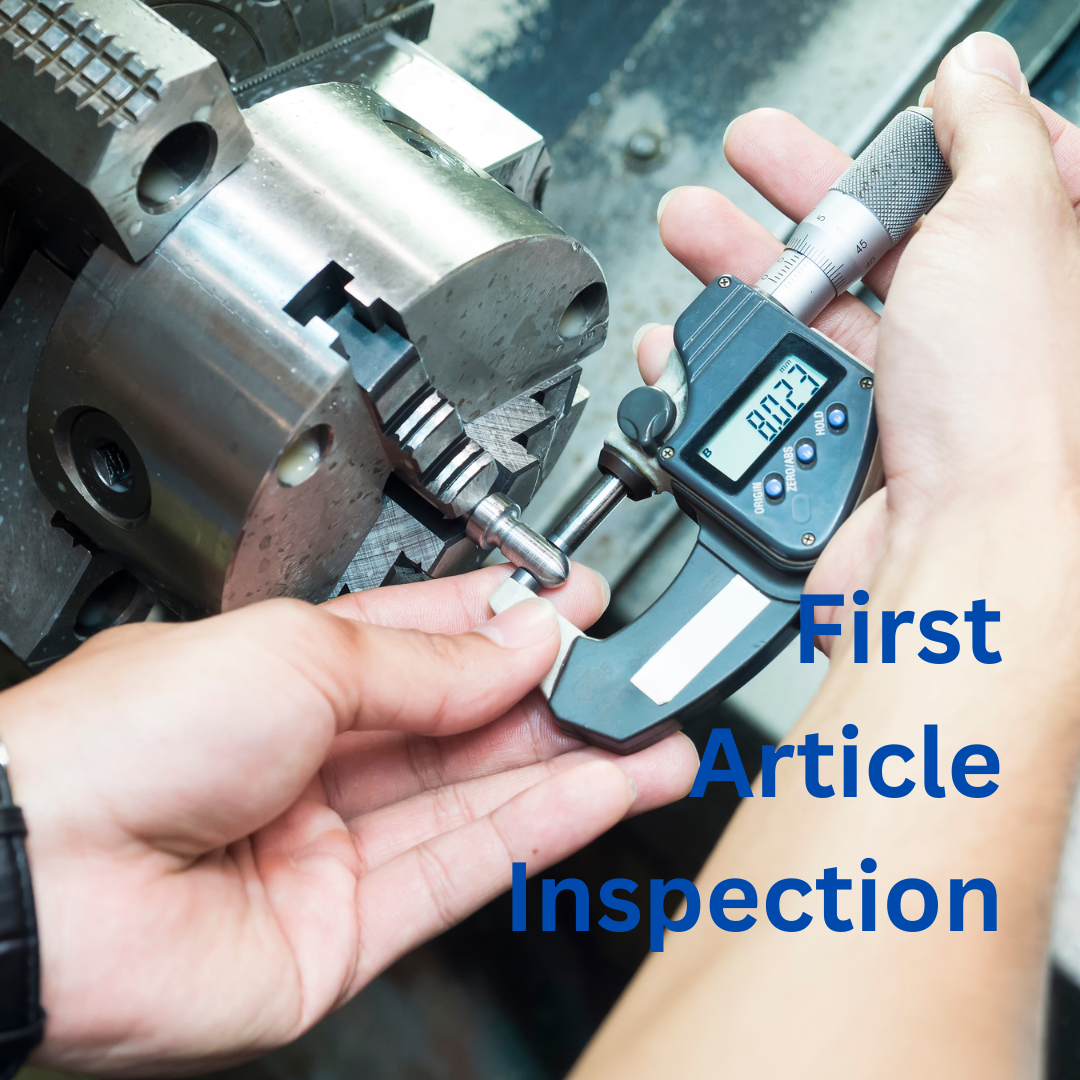

In the world of manufacturing, quality isn’t something that happens by chance — it’s built through discipline, precision, and verification. That’s where the First Article Inspection (FAI) comes in.
FAI is a structured and detailed process that ensures the first piece produced from a new or changed manufacturing process meets all design and engineering requirements. By performing an FAI, companies can confirm product integrity from day one, reducing costly errors and ensuring customer confidence before mass production begins.
What Is First Article Inspection (FAI)?
A First Article Inspection is a formal quality verification process where the first manufactured item of a production run is inspected in detail against engineering drawings, specifications, and requirements.
The purpose of an FAI is to verify that:
-
The manufacturing process is capable of producing parts within specifications.
-
All materials, dimensions, and tolerances are correct.
-
Documentation and traceability are properly maintained.
While it’s most common in aerospace, automotive, defense, and electronics industries, any company that values precision can benefit from implementing FAI.
Example:
An aerospace manufacturer introduces a new machining process for engine brackets. Before starting mass production, the first bracket undergoes a complete FAI to confirm all hole diameters, surface finishes, and material strengths meet the AS9102 standard. This prevents errors from reaching critical flight systems.
Why First Article Inspection Matters
FAI is more than a quality checkpoint — it’s a risk prevention tool. By verifying the first part produced, manufacturers can detect design interpretation issues, equipment problems, or supplier nonconformance early on.
Key Benefits:
-
Prevents costly rework and scrap: Early detection of defects avoids large-scale production waste.
-
Builds customer confidence: Customers gain assurance that products meet exact requirements.
-
Improves process control: FAI highlights weaknesses in production and helps refine procedures.
-
Ensures regulatory compliance: Many industries (like aerospace) require FAIs under standards such as AS9102.
Example:
An automotive supplier once skipped the FAI process on a new steering component. Minor dimensional differences caused assembly problems at the customer’s plant, resulting in delays and rework costs. After implementing FAIs, such issues were eliminated in future projects.
When Should an FAI Be Conducted?
FAI isn’t just for the first time a product is made. It should also be conducted whenever significant changes could affect the product’s form, fit, or function.
Typical triggers include:
-
Introduction of a new product or part
-
Design or drawing revisions
-
Process, material, or tooling changes
-
Change of manufacturing location or supplier
Example:
A medical device company moved its assembly line to a new facility. Before restarting production, a re-FAI confirmed that all dimensions, material properties, and labeling matched the approved design — ensuring no deviation in quality.
The FAI Process: Step-by-Step
A successful FAI follows a structured process to ensure thorough verification and documentation.
Step 1: Preparation
Gather all relevant documents — including drawings, specifications, and Bills of Materials (BOM). Ensure all revisions are current and approved.
Example:
A plastic molding company prepares the latest 3D CAD model, material certificates, and molding parameters before performing the first inspection.
Step 2: Ballooning the Drawing
Each measurable feature on the drawing is “ballooned” and numbered. These numbers correspond to entries in the FAI report for easy traceability.
Step 3: Dimensional and Material Inspection
Inspect the first article against all specified features — including dimensions, tolerances, materials, and finishes. Use calibrated instruments and record results accurately.
Example:
An electronics manufacturer measures PCB hole spacing and copper thickness using precision tools to confirm compliance with design specifications.
Step 4: Documentation and Reporting
Record all results in standard forms — such as AS9102 Form 1 (Part Information), Form 2 (Product Accountability), and Form 3 (Characteristic Accountability).
Step 5: Review and Approval
The final FAI package is reviewed internally and often by the customer. Once approved, production can begin confidently, using the FAI as the baseline for future runs.
Common Challenges and How to Overcome Them
Even with good intentions, many FAIs fail due to preventable mistakes such as missing documentation, outdated drawings, or inconsistent measurements.
Tips for Success:
-
Always use the latest design revisions.
-
Double-check all supporting documents before submission.
-
Train teams on AS9102 standards and digital reporting tools.
-
Involve cross-functional departments (engineering, production, quality).
Example:
A precision machining shop reduced FAI rejection rates by 40% after introducing a digital checklist system that automatically flagged missing data before report submission.
FAI in Continuous Improvement
FAI doesn’t end after the first inspection — it’s a foundation for continuous quality improvement. The findings often reveal process inefficiencies or design weaknesses that can be corrected early.
Example:
A defense supplier discovered minor variations in weld penetration during an FAI. By refining the welding procedure, they improved consistency and applied the improvement across other product lines — raising overall production quality.
Conclusion
First Article Inspection (FAI) plays a vital role in ensuring product quality from day one. It’s not just a compliance requirement — it’s a proactive approach to achieving precision, reliability, and customer satisfaction.
By following a structured process — from preparation to approval — and avoiding common mistakes, manufacturers can confidently launch production knowing that every part meets its exact specifications.
Ultimately, a well-executed FAI builds trust, reduces waste, and strengthens the foundation for long-term operational excellence.